Thursday, 22 February 2018

How Intelligent Buildings Are Exposed To Greater Risks As Technology Advances

There is actually no clear-cut interpretation of an intelligent building due to existing diverse structural configurations expedient on the geographical locale.  However, a prevailing template is the presence of an amalgam of state-of-the-art technologies and interdependent systems that sustain not only the security of the architecture and its residents but also facilitate cost-effective and economical operations as well as spatial flexibility to respond to various functions.  The Intelligent Buildings Institute pinpointed four basic elements: the interconnectedness of structure, systems, services, and management.  The confluence of the systems network and the infrastructure, which is achieved via the use of a common cabling or wireless systems, manages the edifice’s surroundings and circumstances as well as its enterprise.  Thus, there are adaptable workplaces that can be used more efficiently, accessibility to control and security systems that monitor activities and occupancy, and residents’ means to facilities and technology tools.

Image source: commscope.com

The integration of systems leads to reduced costs and enhances efficiency in energy consumption especially if there are energy-saving measures installed as well.  Most important is the maintenance of a comfortable and secure environment that paves the way to improved productivity.


 Although the benefits, convenience, and comfort offered by intelligent buildings are beyond disputable arguments, the infrastructure’s reliance on technology for sustenance is not without the associated risks. For the last two decades, the digital and IT world have been subjected to various perils and menaces.  Intelligent buildings run on sophisticated systems. Thus, it is not inconceivable that the application of converged infrastructure, as well as the assimilation of building and operational systems, can engender novel varieties of threats that could be aimed at the human resources, technology, and operations.  To illustrate, there could be instances, whether deliberately or inadvertently, entrants may opt to ignore security controls or inaccurately operate the systems. The more complex the integration of systems, the higher is the probability of errors or omissions, and more damaging the consequences.  Likewise, systems integration gathers various experts who may have disparate concerns, preferences, cultures, and administrative chains of command that can hinder immediate and timely response to systems flaws and failures.  

Image source: bostonnetworks.co.uk

Unfortunately, the manpower complement of the building has the greatest probability to bear the bigger risks.  There is urgency to set up pertinent and opportune measures to ensure the safety and protection of the occupants as well as the structure.

Reddy Kancharla has extensive knowledge of engineering theories, principles, and practical solutions of engineering problems relating to civil engineering and the construction industry, and the development of quality systems in the construction industry per various codes and standards. He has more than 25 years of experience in projects involving civil construction, geotechnical consultation, and construction QA/QC. For more reads on civil engineering, click here.

Tuesday, 12 December 2017

Trends The Construction Industry Should Watch Out For In 2018

Staying relevant in the construction industry – or any sector, for that matter – entails learning how to read the signs of the time and watching out for trends, because technology is progressing at a breakneck pace, competition is improving, and the market is always shifting.

 Here are some of the trends that are likely to dominate the new year:  

                                          
Image source: spatial.com
Building Information Modeling

Building Information Modeling (BIM) has taken collaboration to the next level, which, in turn, has helped increase the efficiency and quality of construction projects. BIM involves the creation of a digital representation, usually through a 3-D model, and maintaining a database of information pertinent to a building or built asset. In the U.S., BIM will soon be included in construction and building codes, while in the U.K., the BIM Level 2 mandate is already being pursued.  

Modular construction

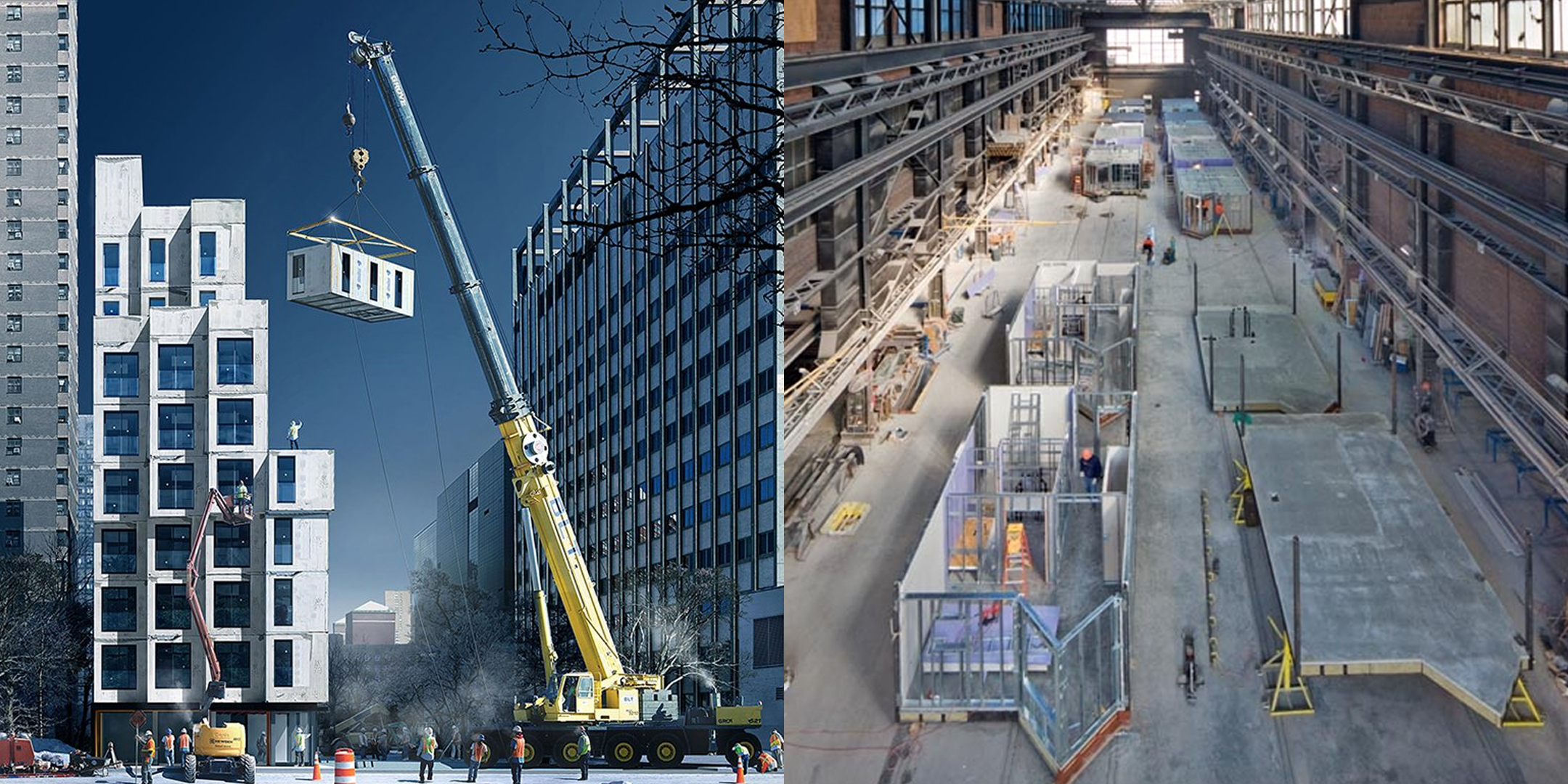
Modular construction involves the prefabrication of structure, whether a house or a building, offsite and then transporting it to the intended location upon its completion. This method has proven to be cost-effective and energy-efficient, as well as having limited impact to the original landscape of the desired site. It also provides homeowners the option of moving their house from city to city, depending on where they wish or need to reside in at a given moment. Because of these advantages, expect more modular structures in 2018.  


Image source: greenhomenyc.org

Environmental sustainability

 As more people are becoming cognizant of the possible adverse effects of modernization and industrialization to the environment, green construction, which had already begun years back, will continue to increase in popularity in the years to come.  

Learn more about the construction industry by checking out this Reddy Kancharla blog.

Wednesday, 8 November 2017

The Angle On Why Pisa Leans

It wasn’t all grave oversight that didn’t set the tower straight. The lean on the Tower of Pisa is evidence how interrupted construction and other factors can tilt, so to speak, structures toward certain outcomes.

This medieval structure, now one of the most recognizable tourist spots in the world, actually took two centuries to build. One can imagine the changes the structure will go through in that span of time. Workers had already added a third floor to it in 1178, but internal conflicts among the Italian states would relegate the continuation of the construction to the 13th century. When construction was abandoned for the first time, the tower was already leaning slightly to the north.

Image source: wikimedia.org

The tower would only be completed in the 14th century, at which time two centuries had elapsed since the beginning of construction.

As if halting construction weren’t enough human error, engineers, architects, and restoration experts are of the opinion that the design and planning were already wanting in the first place. Given the soft and malleable grounds of Pisa, composed of sand and clay characteristic of river banks, the foundation would not have been strong enough to hold the tower upright. In short, the leaning tower was a faulty reclamation project from the start.

Image source: wikimedia.org

In fact, this flaw had already been detected earlier, but workers did not cease adding levels in the ensuing years. The tower teetered further to collapse, but of course, modern technology and knowhow intervened, albeit with their limits. The ground on which the tower is built on would not yield that easily.

This world-renowned structure then remains an expensive project to keep standing.

Reddy Kancharla is a former civil engineer with years of extensive experience in civil construction, geotechnical consultation, and construction QA/QC. Learn more about these concepts by subscribing to this blog.


Saturday, 30 September 2017

The high cost of overlooking quality assurance in construction

Any organization can’t afford to overlook quality assurance if it is determined to remain relevant and thriving in the industry it is in. This is especially true in the construction sector where finished projects are used by the public. A single misstep can prove costly and, in rare cases, even lethal.

Image source: bimlearningcenter.com

There are various ways to ensure quality in the construction process. Firstly, customer and building requirements, as well as local laws should be discussed in the initial phase of the project. This is to provide a measurable way of checking whether the construction is meeting the standards or not.

The quality of the materials should also be examined and scrutinized objectively, making sure that they pass safety requirements. Onsite workers also have to be trained in quality assurance to mitigate risk and determine potential areas of poor quality.

Some of the possible consequences of neglecting these quality measures are the following: 


  • Additional costs: For contractors, repair or redoing of work can incur additional costs and usually delays the completion of the project. For clients, defects discovered later can cause repair or increased maintenance costs. 


  •  Poor reputation: Construction companies bank on their reputation to gain new clients and retain old ones. Failure to meet customer standards can result in loss of business opportunities. 


  •  Injury or death: Failing structures due to poor quality can be harmful to people and have expensive consequences and legal repercussions. 
Image source: cgconstructiontt.com


Reddy Kancharla is former engineer who has more than two decades of experience in civil construction, geotechnical consultation, and construction QA/QC. For more discussion on these topics, follow this Twitter page.

Thursday, 14 September 2017

A Look at Four of New York’s Most Interesting Skyscrapers

New York is one of the world's most renowned urban centers. Through the years, the city's landscape has changed especially with the addition of new buildings to house businesses and residences. With hundreds of buildings in the city, there are a number of structures that stand out. Here's a look at four of New York's most interesting skyscrapers.

Image source: Time.com

One World Trade Center
One can easily spot this architectural and engineering wonder at the Manhattan skyline. At 1,776 ft., it's impossible to miss this skyscraper. The glass tower, which took the place of the original World Trade Center, fully operates on renewable sources of energy.
Comcast Building
Also known as "30 Rock," this is an art-deco style building that has been financed by John D. Rockefeller, Jr. in 1939. Architecture fans will marvel at the slender and timeless exterior of the structure. Though most tourists visit the building for a studio tour, people can also check out the intricate and artistic interiors that have been maintained through the years. This building has long been the HQ of the TV network NBC that broadcasts shows like "30 Rock", "Saturday Night Live," and "Late Night."
Chrysler Building
Before the Empire State Building became the tallest skyscraper in 1930, the Chrysler Building was the holder of the title. Aside from being one of the earliest skyscrapers, the structure was known for its art deco-style just like other New York landmarks built in the ‘30s. However, in the eyes of many, it may not be the tallest skyscraper, but it remains to be an elegant and historical sight that enriches the view of New York.
Empire State Building
For 41 years, the building held the title of being the tallest in the world. Many structures have surpassed the Empire State, but it remains to be one of the most popular skyscrapers in the world. But just like its contemporaries, it followed an art deco-style that it maintained up to this day. In a crowded skyline, the classic sight completes the NYC view. It is a familiar sight in movies and other forms of pop culture. When it comes to noteworthy landmarks in New York, this building will never be missed.
In the coming years, new skyscrapers will rise in New York. Though these buildings have admirable features that will surely contribute to the beauty of the city, these four timeless buildings have played a huge part in the history of New York City.

Image source: Wikimedia.org
Reddy Kancharla has extensive knowledge of engineering theories and principles, practical solutions to engineering problems related to civil engineering and construction industry, and developing quality systems in the construction industry per various codes and standards. For more civil engineering-related posts, follow this Twitter page.