Monday, 15 May 2017

Interesting Facts About the New Yankee Stadium

The new Yankee Stadium is one of the best sports stadiums in the world. Located in Bronx, New York, it is the home stadium of the New York Yankees—which is considered the “greatest” franchise in the baseball world.  While a lot of sports fans miss the original Yankee Stadium, many people praise the technology and architecture of the new stadium. Here are some interesting facts about the new Yankee Stadium.

Image Source: populous.com
The new Yankee Stadium replicates the original Yankee Stadium. The new stadium is located just across the old stadium, which opened in 1923.  The New Yankee Stadium still has the overall look of the old one but is equipped with advanced technology and a more modern architecture. The current stadium offers 63 percent more space than the original one.


The first game in the new stadium was an exhibition game between the Yankees and the Chicago Cubs. The game took place on Apr. 3, 2009, and the Yankees won against the Cubs 7-4.


It has a Monument Park. The Monument Park, located behind the center field, is a place where good Yankee players are honored.  Fans can visit the Monument Park before the start of each game.


Jay-Z and Eminem were the first musical artists to perform in the new stadium. The concert, which was held on Sept. 13 and 14, 2010, also featured artists Chris Martin, 50 Cent, Drake, and Kanye West.

Reddy Kancharla has worked on several high-profile buildings in New York City, including the New Yankee Stadium and the 7 World Trade Center. Follow this Twitter page for more construction updates.

Monday, 10 April 2017

A Home Preparation Guide For Earthquakes

As much as possible, geotechnical consultants will advise construction companies not to build homes near fault lines. Such areas are more prone to damage from tectonic shifts. However, sometimes real estate development push through and homeowners are just advised to learn how to prepare in the event of an earthquake.

In order to help homeowners during such emergencies, civil construction professionals have listed several guidelines:

Image Source: usgshandbook.com
Have a grab-and-go emergency kit: There is no time to think during earthquakes. Experts suggest leaving home at the first signs of the earthquake. Open, expansive places are ideal as there would be less risk of being crushed by a falling building. It is, therefore, important to have one’s essentials in a bag. This emergency kit should be kept near the door and free of non-essentials. Among the items that should be inside this bag are food, bottled water, first aid supplies, medication, communication devices, contact lists, cash, and extra clothing.

Secure heavy furniture: Furniture pieces can easily be dislodged and cause injury. Homes that are built on fault lines should be affixed to the wall. Homeowners should ask constructors the best way to secure items such as bookcases, appliances, beds, pianos, and dressers.

Place breakable objects on low areas: Some people forget that putting glass or other breakable items on high shelves can hurt people in the event of an earthquake. Homeowners should, therefore, keep breakable and heavy objects as close to the floor as possible to prevent injury. The kitchen, in particular, is a highly dangerous place as there are many breakable items inside. Make sure that knives and other similar items are properly stored in secured cabinets.

Image Source: washington.edu
Turn off the gas: This is not only for high-risk homes but is a general safety practice. Homeowners should always know where their gas outlets are and how to turn them off. At the first signs of an earthquake, these gas outlets should be immediately turned off.

Reddy Kancharla is a civil construction industry professional and geotechical consultant. For similar reads, visit this blog.

Thursday, 30 March 2017

Understanding the different types of building foundations

The foundation is an integral part of any building; it transfers loads of the structure to the ground to make sure that it would be able to stand for a very long time, if not a lifetime. There are two categories of foundations, namely shallow foundations, which is also sometimes called spread or open footings, and deep foundations. 

Image source: bangkokbuilder.com

Under these categories, there are different types of foundations, including: 

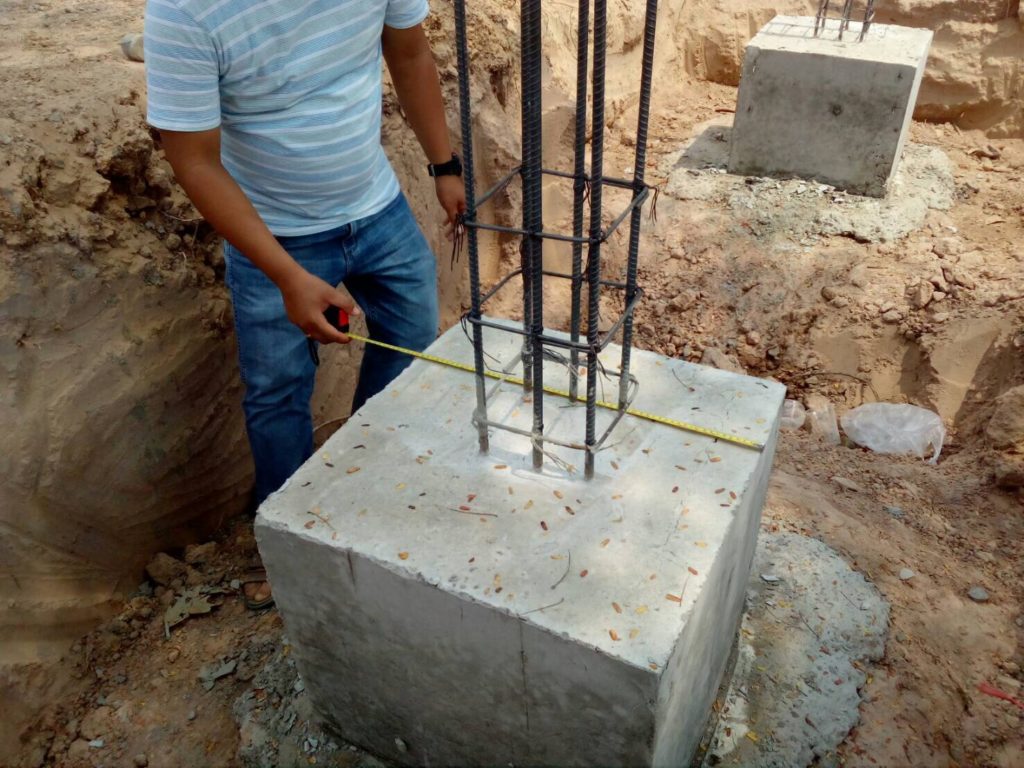
Individual footings: One of the most simple and common types of foundations, this shallow foundation makes use of columns that have individual footings, in which the entire load of a building will be distributed. 

Strip footings: Usually found in load-bearing masonry constructions, strip footings are shallow foundations used when the building loads are intended to be carried by the walls instead of individual columns. 

Raft foundations: Also called mat foundations, this type of shallow foundation is used for low-rise buildings designed with a basement. The basement floor slab serves as the foundation of the structure, with the load evenly spread over the large area. 

Pile foundations: The most common deep foundation, it uses piles, which are long shafts made of a strong material, such as wood, steel, and concrete. Pile foundations are used in high-rise buildings, or if the top layers of the site soil are weak, thus, there is a need to bypass these layers and transfer the structure’s loads to a stronger layer underneath.

Image source: pinterest.com

Reddy Kancharla
is a former civil engineer with years of extensive experience in civil construction, geotechnical consultation, and construction QA/QC. Learn more about these concepts by subscribing to this blog.