Wednesday, 23 January 2019

What is a geotechnical soil report?

Before a building, road, bridge, or other types of infrastructure, local authorities in most towns and cities require a geotechnical soil report or soil survey that had been conducted by accredited agencies. Without this document, a project would not proceed. Therefore, companies and contractors should include soil report while planning for the construction of a structure – whether permanent or temporary.
Image source: paulsamgeo-engineering.co.tz
 The soil report would ensure that the site can withstand the load of the structure and avoid risking harm to the people and other structures surrounding it.

The first step in creating a soil report is a soil analysis. Depending on the area involved, boreholes might have to be drilled to extract soil samples, which would then be sent to geotechnical service testing laboratories for investigation. From here, there would be a general idea on the condition of the soil.

Image source: agriland.ie
The conditions of the project site would also have to be examined. A brief geological history of the area would be researched, which includes records of landslides, seismic activities, and any prior land usage. A reconnaissance of the site would also have to be made to provide information about the terrain, geology, nearby faults, water table, sinkholes, and other items.

The resulting report would show whether constructing the structure is feasible. Recommendations can also be presented to ensure the safety of the project and the stability of the structure.

Reddy Kancharla is a former civil engineer who has experience in various fields that include geotechnical consultation. Visit this blog for more related topics.

The truth about civil construction and its impact on society

Civil engineering builds a critical feature in every community. Professionals in this field of engineering are the ones in charge of studying the science of building and designing bridges, roads, highways, and other major construction projects.

Image source: Northampton.ac.uk
The modern world expects civil engineers to find creative and innovative means wherein they can boost infrastructure through the changes in climate, increased urbanization, and even drought. Construction engineering is a branch of civil engineering first introduced in 1963 at Iowa State University. This branch of civil engineering is in charge of the planning, management, and construction of infrastructures like bridges, highways, roads, railroads, airports and more.

Image source: arcadis.com
The construction for such infrastructures demands the involvement of engineers from the fields of hydraulic, transportation, environmental, geotechnical, site development, and structural engineering, to execute the designs. Considered as problem solvers, construction engineers assist in developing infrastructures that live up to the demands of their environment. A construction engineer must possess an accurate knowledge of mathematics, science, communication, analytical thinking, time management, and other skills that are essential for solving problems.

Civil engineering and construction is a field that offers great opportunities. The modern world is surrounded by countless contributions of civil engineering through creativity and continuous innovation. Without the efforts of engineers, people could be put in harm’s way and the environment compromised. No matter how modern the world can get, the safety of the people and environment must remain as the top priority of civil engineering and construction.

Reddy Kancharla has extensive knowledge of engineering theories, principles, and practical solutions of engineering problems relating to civil engineering and the construction industry, and the development of quality systems in the construction industry per various codes and standards. Head over to this blog for similar updates.

Geotechnics and its role in construction and development

Geotechnical engineering is the branch of engineering studying and working with soil and rock, underground water, site and structural conditions, with regard to a construction project. Engineers who work in this field are tasked to plan and design the structures for roads, buildings, canals, embankments, and other construction projects.

Image source: solexperts.com
Considered multi-disciplinary, geotechnical engineering also deals with geological hazards such as soil erosion, landslides, and in extreme cases, earthquakes. To improve and refine methods and equipment in performing ground surveys, research and development in geotechnical engineering is conducted. Geotechnical engineers would have to spend most of their time in the field and in facilities for analysis.

Image source: infrast.net
Engineers in the geotechnical industry must be inquisitive, motivated, and committed to their duties such as calculating and analyzing the behavior and capacity of soil and rock when it comes to planning buildings, dams, bridges, and other structures. As the behavior of the ground constantly changes, geotechnical engineers should also be ready to operate innovative equipment, apply updated safety regulations, and take on other aspects of the work beyond their job description. In addition, they could study and assess slope stability, and hazards such as landslides, avalanches, and rock fall.

With a bachelor’s degree in civil engineering or other mathematics, science, and geology, geotechnical engineers can enroll in graduate studies to fortify their expertise. Without the expertise of geotechnical engineers, it would be impossible to build strong structures that would last lifetimes. The safety of the people who will be needing the structures built for their day-to-day lives rely heavily on the skills of these engineers.

Reddy Kancharla has more than 25 years of experience in projects involving civil construction, geotechnical consultation, and construction QA/QC. In addition, he has 10 years of senior management experience. Visit this blog for more updates on civil engineering.

Tuesday, 22 January 2019

Future builders: An inspiring look at young people in love with engineering

For veteran engineers, it’s an extremely heartwarming occasion to see young people who aren’t even out of school yet to have such a love for engineering. These are the future builders of the world, with a bright future ahead.
Image source: mukilteobeacon.villagesoup.com
 There was a story on some students from Mukilteo Washington who used their spring break to expand their knowledge in engineering in what is known as a Youth Engineering Lab. In it, young people were exposed to computer software, robotics, and other tools used for engineering.

Image source: mukilteobeacon.villagesoup.com 
However, this is the only instance wherein America’s youth has fallen in love with engineering. Over the years, the number of engineering students has increased with a steady success rate after graduation. The youth of the country has constantly improved in terms of their capacity to make decisions, innovate, and open themselves to learning new things – all of which are qualities of top-notch engineers.

Nowadays, teens have taken it upon themselves to learn how to use modern engineering devices such as 3D printers and robotic controls to create miniature models of future structures.
This is as promising as it is inspiring. And of course, for old-school engineers, very comforting knowing that the future of American engineering is in good hands.

Reddy Kancharla is equipped with a comprehensive knowledge on engineering theories, principles, and practical solutions of engineering problems in civil engineering and the construction industry. Follow this Twitter page for more discussion on the field of civil engineering.

Importance of structural engineering in the construction world

As one of the most fundamental branches of engineering, structural engineering is necessary for all major construction works for them to be built safely. This is due to the very basic principle that states that structures should first and foremost be able to carry their own weight and withstand the load to be placed upon it. Here are further reasons why structural engineering is necessary in the construction world.
Image source: istructe.org
 The main function of structural engineering is seeing to it that a structure is safe. This safety can be translated as safety during construction as well as the usage. For example, structural engineers, upon reviewing the designs and materials to be used for a bridge, can determine the maximum weight it can hold. It can even determine the up to what magnitude of an earthquake a building can withstand.
Image source: huntsvillecivilengineering.com
Structural engineers are also tasked to make sure that all building materials are used efficiently. Switching construction material can be detrimental to the structural integrity of a building if chosen poorly. Structural engineers need to seek the most cost-efficient construction material that ensures both safety and functionality.

Perhaps the biggest task of structural engineers is combining the whims of building designers and the people involved with the project’s budget. Structural engineers are expected to work on the aesthetic designs laid out, make them functional, safe, and within the expected cost of the project.

Reddy Kancharla has extensive knowledge of engineering theories, principles, and practical solutions of engineering problems relating to civil engineering and the construction industry, and the development of quality systems in the construction industry per various codes and standards. For more reads on structural engineering and engineering in general, visit this blog.

Thursday, 22 February 2018

How Intelligent Buildings Are Exposed To Greater Risks As Technology Advances

There is actually no clear-cut interpretation of an intelligent building due to existing diverse structural configurations expedient on the geographical locale.  However, a prevailing template is the presence of an amalgam of state-of-the-art technologies and interdependent systems that sustain not only the security of the architecture and its residents but also facilitate cost-effective and economical operations as well as spatial flexibility to respond to various functions.  The Intelligent Buildings Institute pinpointed four basic elements: the interconnectedness of structure, systems, services, and management.  The confluence of the systems network and the infrastructure, which is achieved via the use of a common cabling or wireless systems, manages the edifice’s surroundings and circumstances as well as its enterprise.  Thus, there are adaptable workplaces that can be used more efficiently, accessibility to control and security systems that monitor activities and occupancy, and residents’ means to facilities and technology tools.

Image source: commscope.com

The integration of systems leads to reduced costs and enhances efficiency in energy consumption especially if there are energy-saving measures installed as well.  Most important is the maintenance of a comfortable and secure environment that paves the way to improved productivity.


 Although the benefits, convenience, and comfort offered by intelligent buildings are beyond disputable arguments, the infrastructure’s reliance on technology for sustenance is not without the associated risks. For the last two decades, the digital and IT world have been subjected to various perils and menaces.  Intelligent buildings run on sophisticated systems. Thus, it is not inconceivable that the application of converged infrastructure, as well as the assimilation of building and operational systems, can engender novel varieties of threats that could be aimed at the human resources, technology, and operations.  To illustrate, there could be instances, whether deliberately or inadvertently, entrants may opt to ignore security controls or inaccurately operate the systems. The more complex the integration of systems, the higher is the probability of errors or omissions, and more damaging the consequences.  Likewise, systems integration gathers various experts who may have disparate concerns, preferences, cultures, and administrative chains of command that can hinder immediate and timely response to systems flaws and failures.  

Image source: bostonnetworks.co.uk

Unfortunately, the manpower complement of the building has the greatest probability to bear the bigger risks.  There is urgency to set up pertinent and opportune measures to ensure the safety and protection of the occupants as well as the structure.

Reddy Kancharla has extensive knowledge of engineering theories, principles, and practical solutions of engineering problems relating to civil engineering and the construction industry, and the development of quality systems in the construction industry per various codes and standards. He has more than 25 years of experience in projects involving civil construction, geotechnical consultation, and construction QA/QC. For more reads on civil engineering, click here.

Tuesday, 12 December 2017

Trends The Construction Industry Should Watch Out For In 2018

Staying relevant in the construction industry – or any sector, for that matter – entails learning how to read the signs of the time and watching out for trends, because technology is progressing at a breakneck pace, competition is improving, and the market is always shifting.

 Here are some of the trends that are likely to dominate the new year:  

                                          
Image source: spatial.com
Building Information Modeling

Building Information Modeling (BIM) has taken collaboration to the next level, which, in turn, has helped increase the efficiency and quality of construction projects. BIM involves the creation of a digital representation, usually through a 3-D model, and maintaining a database of information pertinent to a building or built asset. In the U.S., BIM will soon be included in construction and building codes, while in the U.K., the BIM Level 2 mandate is already being pursued.  

Modular construction

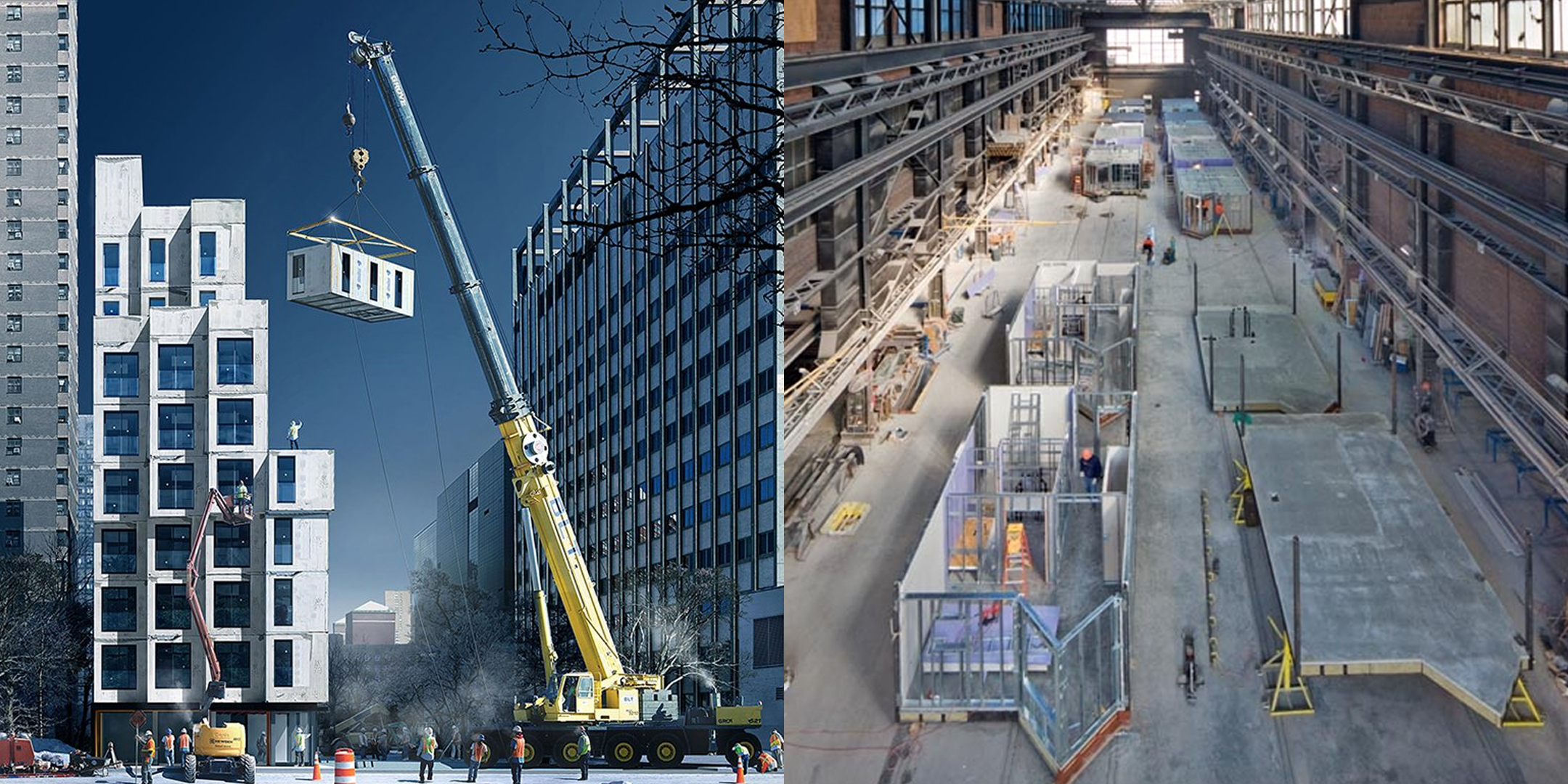
Modular construction involves the prefabrication of structure, whether a house or a building, offsite and then transporting it to the intended location upon its completion. This method has proven to be cost-effective and energy-efficient, as well as having limited impact to the original landscape of the desired site. It also provides homeowners the option of moving their house from city to city, depending on where they wish or need to reside in at a given moment. Because of these advantages, expect more modular structures in 2018.  


Image source: greenhomenyc.org

Environmental sustainability

 As more people are becoming cognizant of the possible adverse effects of modernization and industrialization to the environment, green construction, which had already begun years back, will continue to increase in popularity in the years to come.  

Learn more about the construction industry by checking out this Reddy Kancharla blog.